Pic story of two generations of bird guardians in China's Jilin

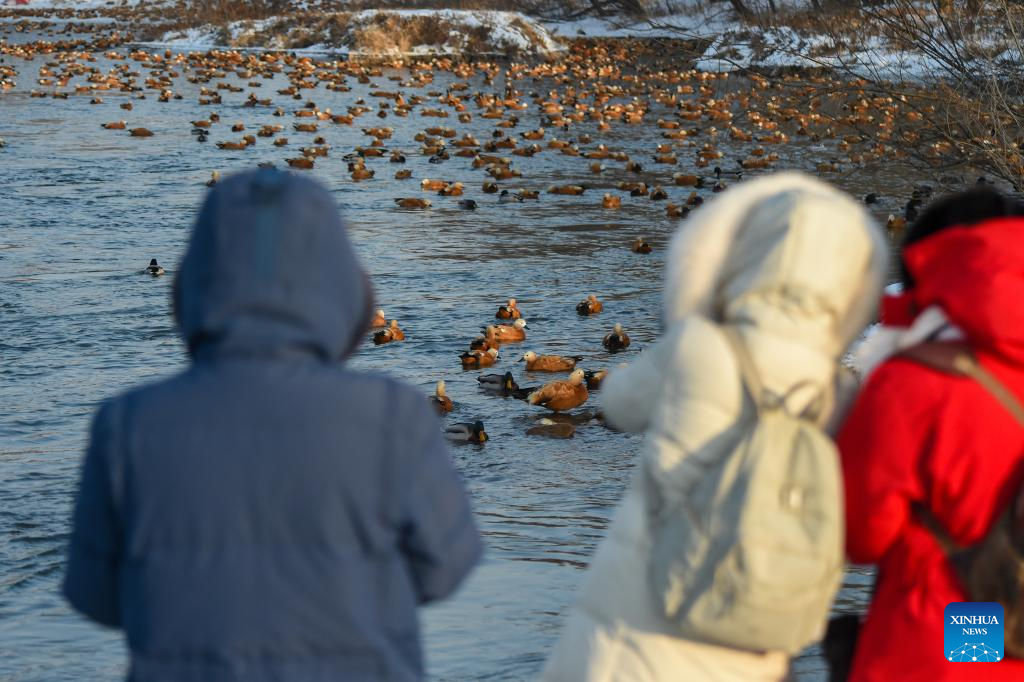
Tourists go birdwatching on Changbai Island in Jilin City, northeast China's Jilin Province, Jan. 28, 2026. Wang Tingting, a post-90s bird protector, stays every day at Changbai Island wetland park, a bird paradise seated by the Songhua River in Jilin City, to care for the birds--providing food and observing their living conditions.
In 1996, Wang Tingting's uncle Ren Jianguo dropped his business as a ferryman near Changbai Island, and became a bird keeper as he often saw people hunting birds.
Wang took over her uncle's job when he was hospitalized for a sudden illness in 2023, and has rescued more than 50 birds on average each year.
In recent years, local authorities of the city have continuously restored the wetland ecology of Changbai Island. Through a series of effective measures such as dispatching dedicated personnel for bird protection, standardizing viewing activities, strictly controlling sewage discharge, and scientifically restocking, Changbai Island has returned to its natural ecological beauty.
Nowadays, over 13,000 birds come to Changbai Island for the winter every year. The spectacle of thousands of birds flocking together has become a major attraction for both citizens and tourists. (Xinhua/Zhang Nan)
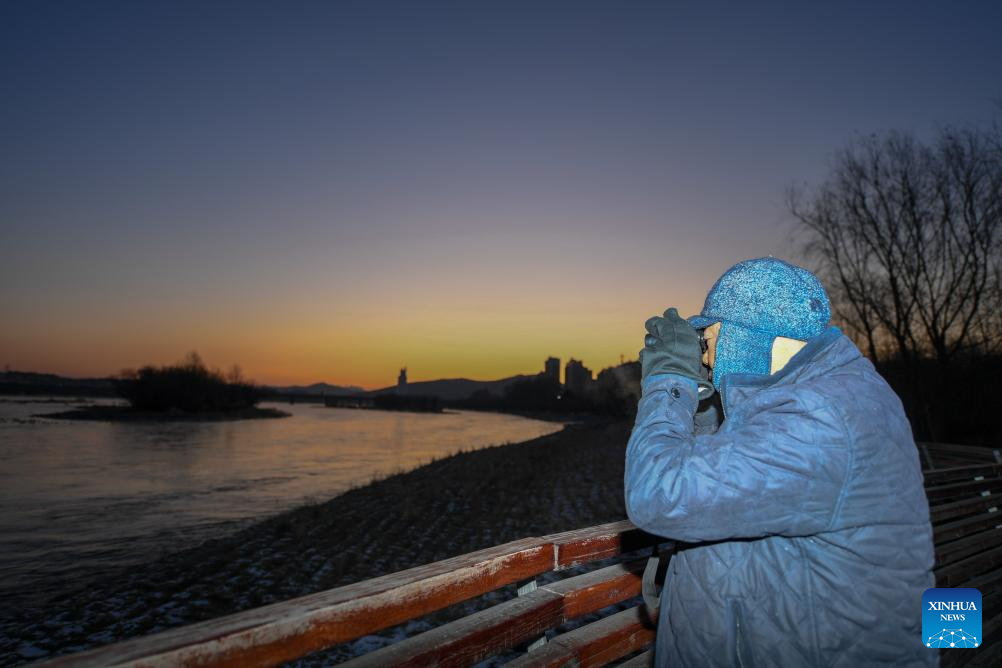
Ren Jianguo observes bird habitats on Changbai Island in Jilin City, northeast China's Jilin Province, Dec. 6, 2019. Wang Tingting, a post-90s bird protector, stays every day at Changbai Island wetland park, a bird paradise seated by the Songhua River in Jilin City, to care for the birds--providing food and observing their living conditions.
In 1996, Wang Tingting's uncle Ren Jianguo dropped his business as a ferryman near Changbai Island, and became a bird keeper as he often saw people hunting birds.
Wang took over her uncle's job when he was hospitalized for a sudden illness in 2023, and has rescued more than 50 birds on average each year.
In recent years, local authorities of the city have continuously restored the wetland ecology of Changbai Island. Through a series of effective measures such as dispatching dedicated personnel for bird protection, standardizing viewing activities, strictly controlling sewage discharge, and scientifically restocking, Changbai Island has returned to its natural ecological beauty.
Nowadays, over 13,000 birds come to Changbai Island for the winter every year. The spectacle of thousands of birds flocking together has become a major attraction for both citizens and tourists. (Xinhua/Zhang Nan)
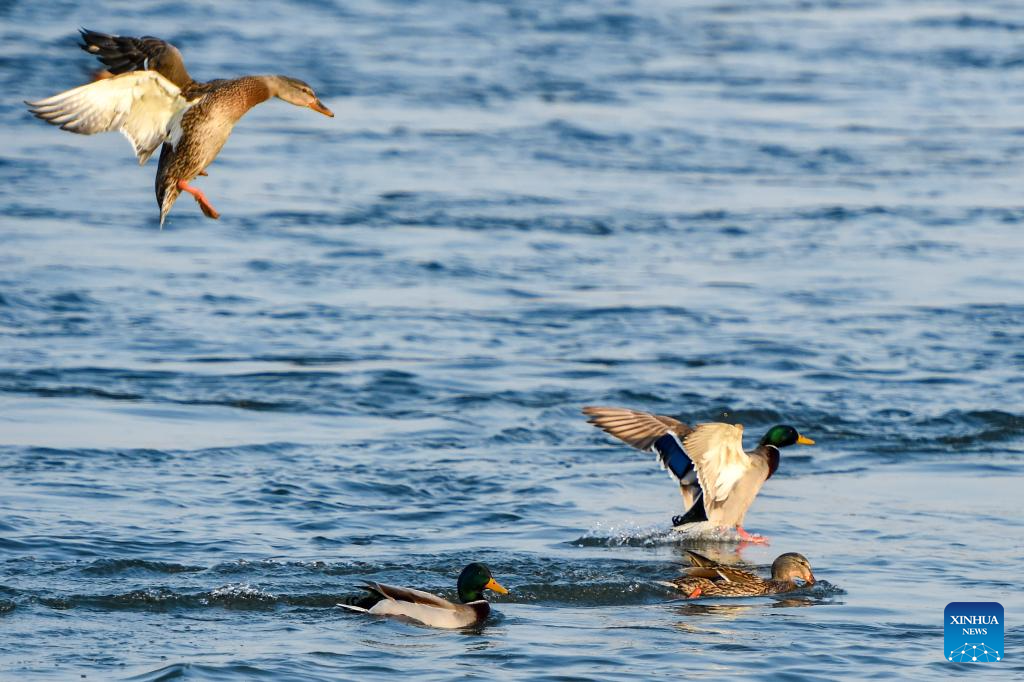
Birds inhabit the waters of Changbai Island in Jilin City, northeast China's Jilin Province, Jan. 28, 2026. Wang Tingting, a post-90s bird protector, stays every day at Changbai Island wetland park, a bird paradise seated by the Songhua River in Jilin City, to care for the birds--providing food and observing their living conditions.
In 1996, Wang Tingting's uncle Ren Jianguo dropped his business as a ferryman near Changbai Island, and became a bird keeper as he often saw people hunting birds.
Wang took over her uncle's job when he was hospitalized for a sudden illness in 2023, and has rescued more than 50 birds on average each year.
In recent years, local authorities of the city have continuously restored the wetland ecology of Changbai Island. Through a series of effective measures such as dispatching dedicated personnel for bird protection, standardizing viewing activities, strictly controlling sewage discharge, and scientifically restocking, Changbai Island has returned to its natural ecological beauty.
Nowadays, over 13,000 birds come to Changbai Island for the winter every year. The spectacle of thousands of birds flocking together has become a major attraction for both citizens and tourists. (Xinhua/Zhang Nan)
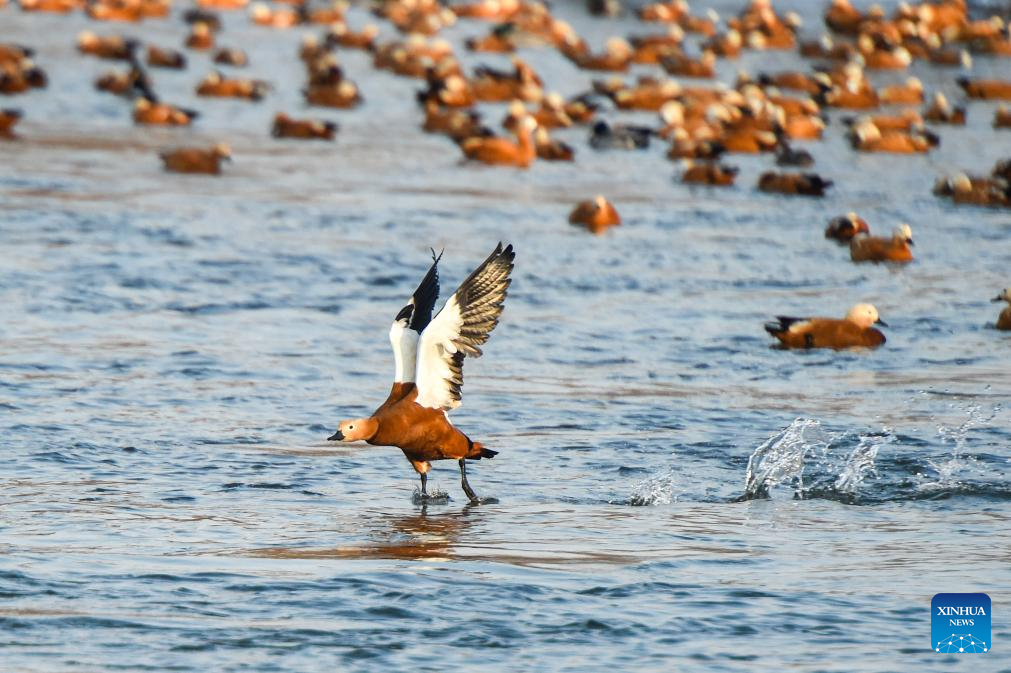
Birds inhabit the waters of Changbai Island in Jilin City, northeast China's Jilin Province, Jan. 28, 2026. Wang Tingting, a post-90s bird protector, stays every day at Changbai Island wetland park, a bird paradise seated by the Songhua River in Jilin City, to care for the birds--providing food and observing their living conditions.
In 1996, Wang Tingting's uncle Ren Jianguo dropped his business as a ferryman near Changbai Island, and became a bird keeper as he often saw people hunting birds.
Wang took over her uncle's job when he was hospitalized for a sudden illness in 2023, and has rescued more than 50 birds on average each year.
In recent years, local authorities of the city have continuously restored the wetland ecology of Changbai Island. Through a series of effective measures such as dispatching dedicated personnel for bird protection, standardizing viewing activities, strictly controlling sewage discharge, and scientifically restocking, Changbai Island has returned to its natural ecological beauty.
Nowadays, over 13,000 birds come to Changbai Island for the winter every year. The spectacle of thousands of birds flocking together has become a major attraction for both citizens and tourists. (Xinhua/Zhang Nan)
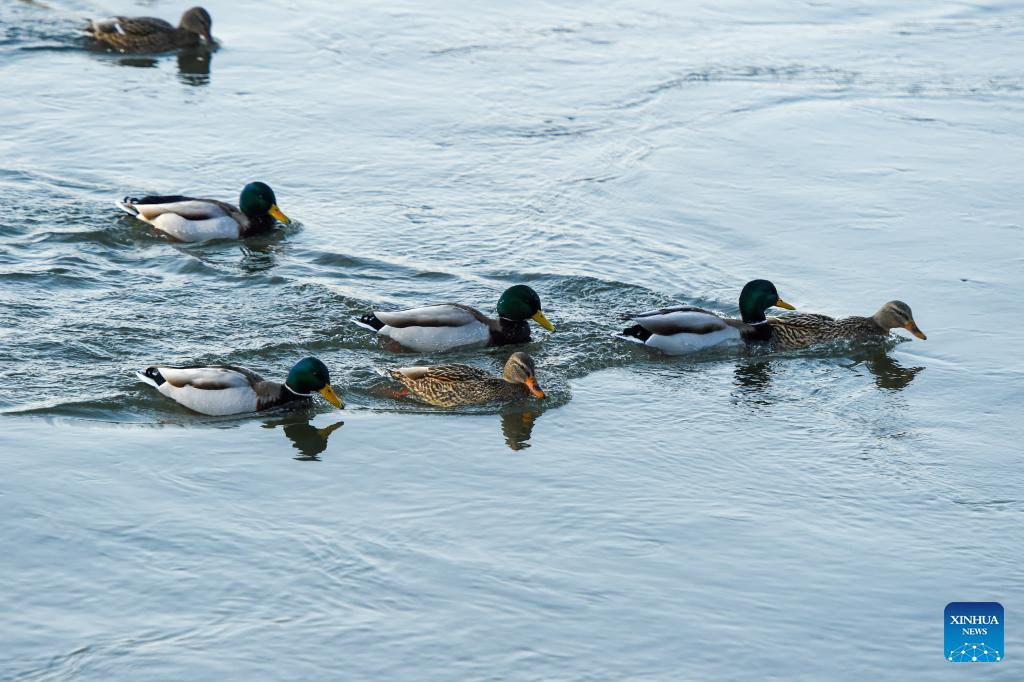
Birds inhabit the waters of Changbai Island in Jilin City, northeast China's Jilin Province, Jan. 28, 2026. Wang Tingting, a post-90s bird protector, stays every day at Changbai Island wetland park, a bird paradise seated by the Songhua River in Jilin City, to care for the birds--providing food and observing their living conditions.
In 1996, Wang Tingting's uncle Ren Jianguo dropped his business as a ferryman near Changbai Island, and became a bird keeper as he often saw people hunting birds.
Wang took over her uncle's job when he was hospitalized for a sudden illness in 2023, and has rescued more than 50 birds on average each year.
In recent years, local authorities of the city have continuously restored the wetland ecology of Changbai Island. Through a series of effective measures such as dispatching dedicated personnel for bird protection, standardizing viewing activities, strictly controlling sewage discharge, and scientifically restocking, Changbai Island has returned to its natural ecological beauty.
Nowadays, over 13,000 birds come to Changbai Island for the winter every year. The spectacle of thousands of birds flocking together has become a major attraction for both citizens and tourists. (Xinhua/Zhang Nan)
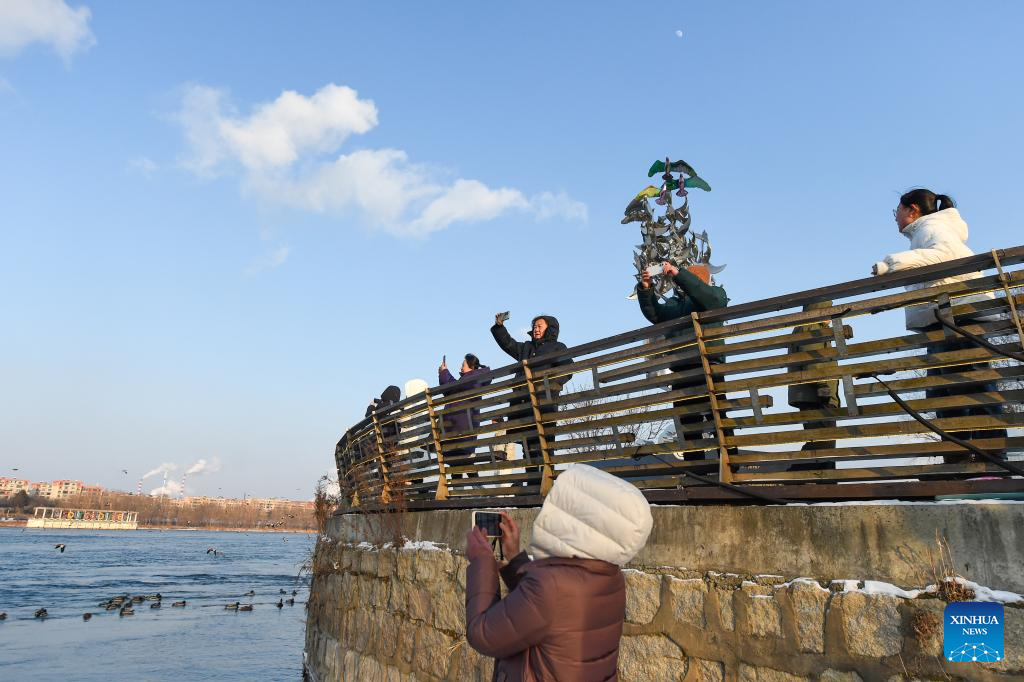
Tourists go birdwatching on Changbai Island in Jilin City, northeast China's Jilin Province, Jan. 28, 2026. Wang Tingting, a post-90s bird protector, stays every day at Changbai Island wetland park, a bird paradise seated by the Songhua River in Jilin City, to care for the birds--providing food and observing their living conditions.
In 1996, Wang Tingting's uncle Ren Jianguo dropped his business as a ferryman near Changbai Island, and became a bird keeper as he often saw people hunting birds.
Wang took over her uncle's job when he was hospitalized for a sudden illness in 2023, and has rescued more than 50 birds on average each year.
In recent years, local authorities of the city have continuously restored the wetland ecology of Changbai Island. Through a series of effective measures such as dispatching dedicated personnel for bird protection, standardizing viewing activities, strictly controlling sewage discharge, and scientifically restocking, Changbai Island has returned to its natural ecological beauty.
Nowadays, over 13,000 birds come to Changbai Island for the winter every year. The spectacle of thousands of birds flocking together has become a major attraction for both citizens and tourists. (Xinhua/Zhang Nan)
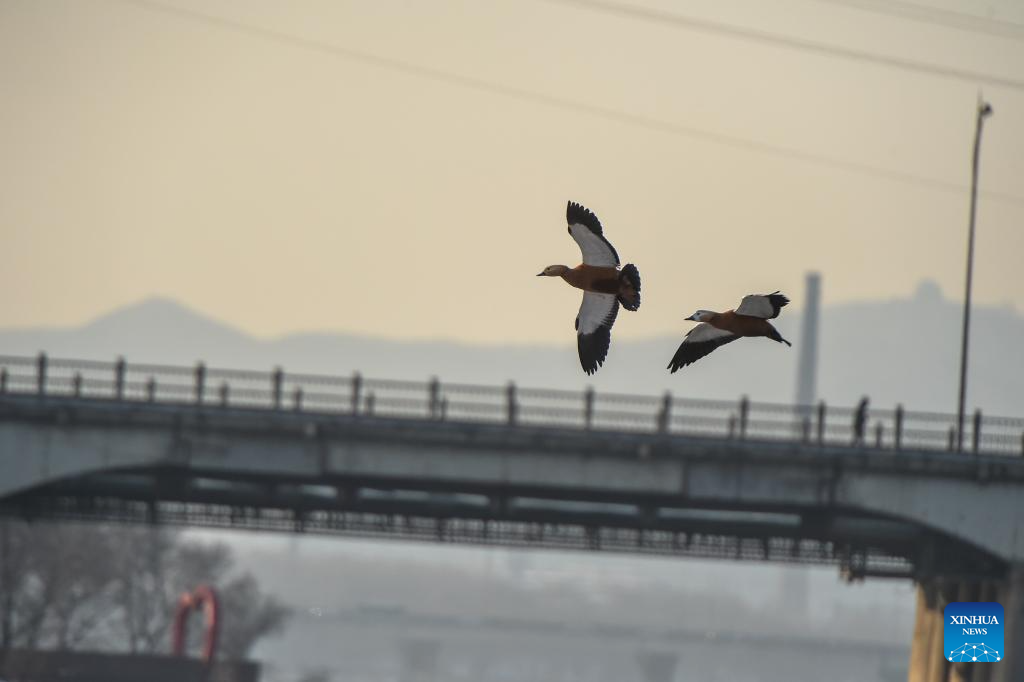
Birds soar over Changbai Island in Jilin City, northeast China's Jilin Province, Jan. 28, 2026. Wang Tingting, a post-90s bird protector, stays every day at Changbai Island wetland park, a bird paradise seated by the Songhua River in Jilin City, to care for the birds--providing food and observing their living conditions.
In 1996, Wang Tingting's uncle Ren Jianguo dropped his business as a ferryman near Changbai Island, and became a bird keeper as he often saw people hunting birds.
Wang took over her uncle's job when he was hospitalized for a sudden illness in 2023, and has rescued more than 50 birds on average each year.
In recent years, local authorities of the city have continuously restored the wetland ecology of Changbai Island. Through a series of effective measures such as dispatching dedicated personnel for bird protection, standardizing viewing activities, strictly controlling sewage discharge, and scientifically restocking, Changbai Island has returned to its natural ecological beauty.
Nowadays, over 13,000 birds come to Changbai Island for the winter every year. The spectacle of thousands of birds flocking together has become a major attraction for both citizens and tourists. (Xinhua/Zhang Nan)
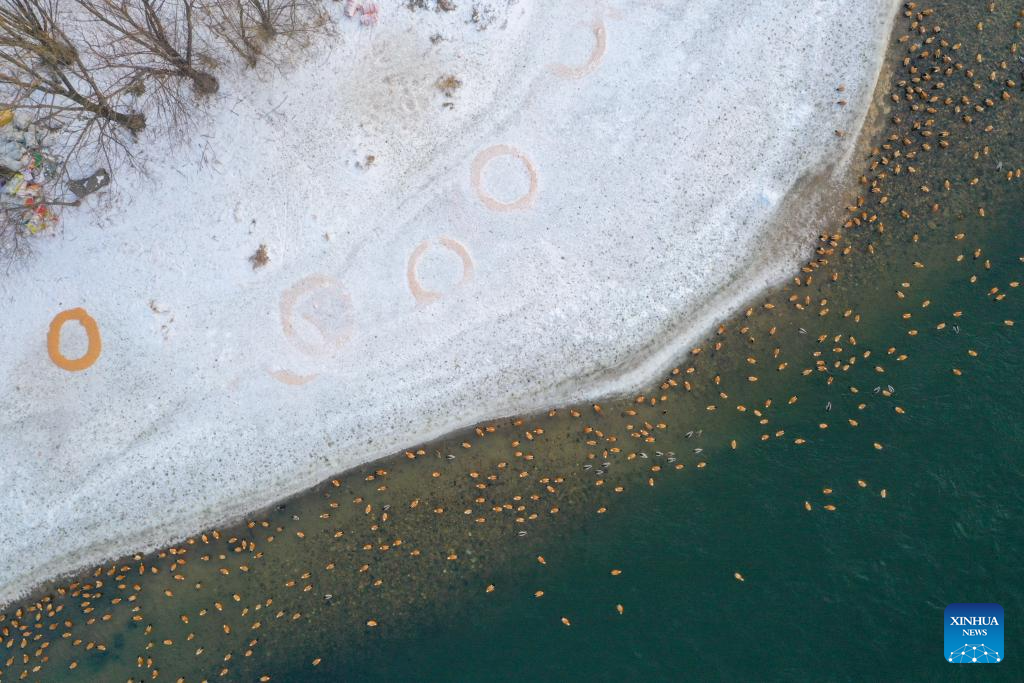
An aerial drone photo taken on Jan. 28, 2026 shows a large number of birds inhabiting Changbai Island in Jilin City, northeast China's Jilin Province. Wang Tingting, a post-90s bird protector, stays every day at Changbai Island wetland park, a bird paradise seated by the Songhua River in Jilin City, to care for the birds--providing food and observing their living conditions.
In 1996, Wang Tingting's uncle Ren Jianguo dropped his business as a ferryman near Changbai Island, and became a bird keeper as he often saw people hunting birds.
Wang took over her uncle's job when he was hospitalized for a sudden illness in 2023, and has rescued more than 50 birds on average each year.
In recent years, local authorities of the city have continuously restored the wetland ecology of Changbai Island. Through a series of effective measures such as dispatching dedicated personnel for bird protection, standardizing viewing activities, strictly controlling sewage discharge, and scientifically restocking, Changbai Island has returned to its natural ecological beauty.
Nowadays, over 13,000 birds come to Changbai Island for the winter every year. The spectacle of thousands of birds flocking together has become a major attraction for both citizens and tourists. (Xinhua/Zhang Nan)
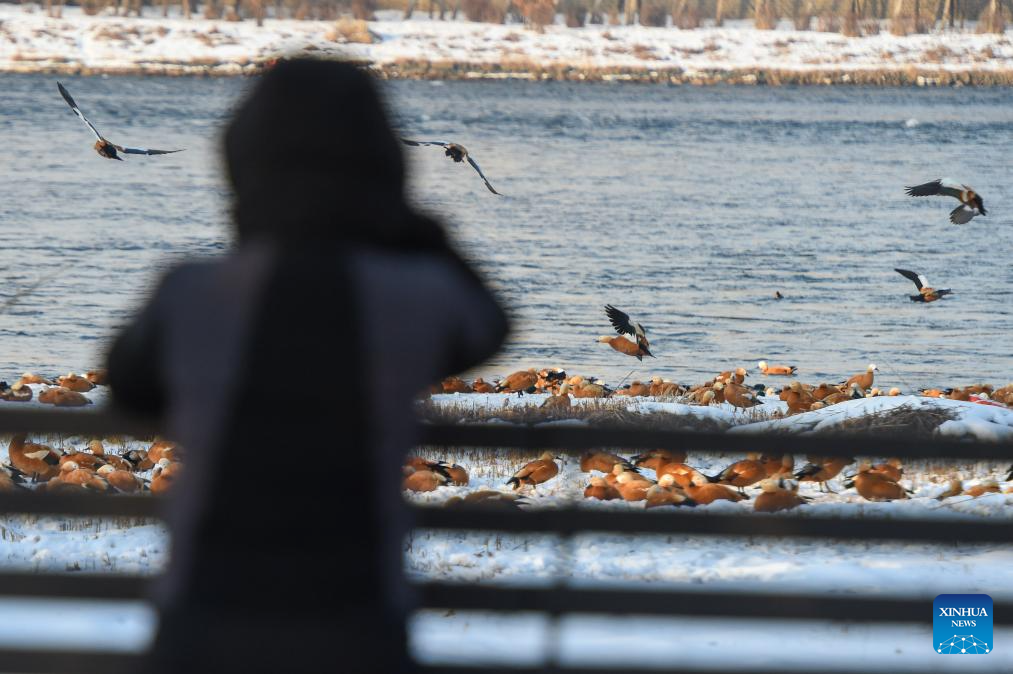
A tourist goes birdwatching on Changbai Island in Jilin City, northeast China's Jilin Province, Jan. 28, 2026. Wang Tingting, a post-90s bird protector, stays every day at Changbai Island wetland park, a bird paradise seated by the Songhua River in Jilin City, to care for the birds--providing food and observing their living conditions.
In 1996, Wang Tingting's uncle Ren Jianguo dropped his business as a ferryman near Changbai Island, and became a bird keeper as he often saw people hunting birds.
Wang took over her uncle's job when he was hospitalized for a sudden illness in 2023, and has rescued more than 50 birds on average each year.
In recent years, local authorities of the city have continuously restored the wetland ecology of Changbai Island. Through a series of effective measures such as dispatching dedicated personnel for bird protection, standardizing viewing activities, strictly controlling sewage discharge, and scientifically restocking, Changbai Island has returned to its natural ecological beauty.
Nowadays, over 13,000 birds come to Changbai Island for the winter every year. The spectacle of thousands of birds flocking together has become a major attraction for both citizens and tourists. (Xinhua/Zhang Nan)
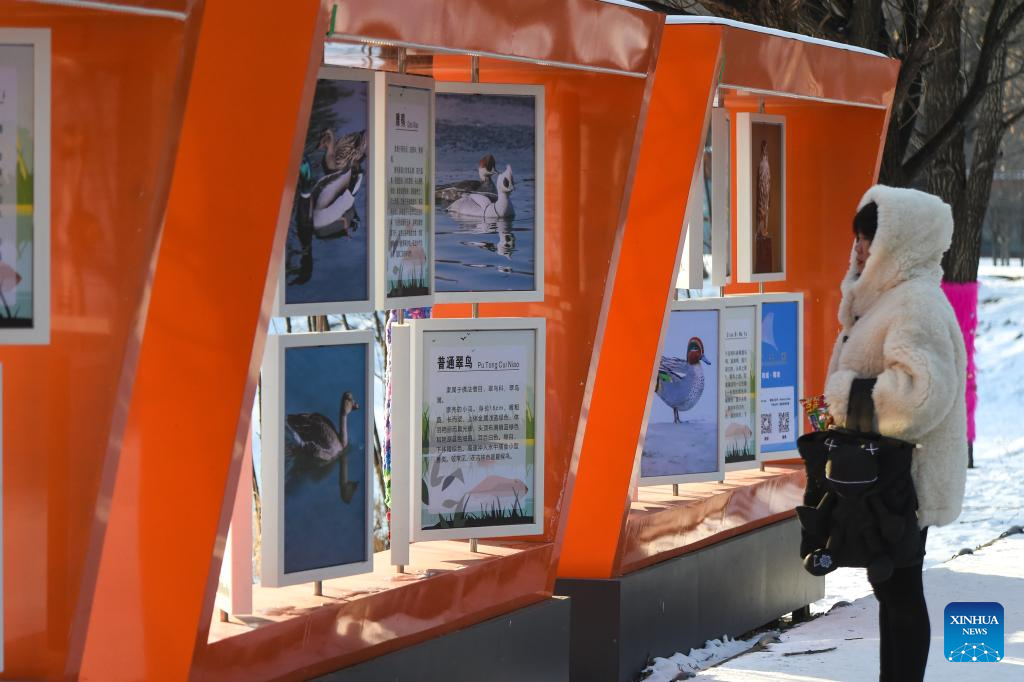
A tourist browses the bird posters on Changbai Island in Jilin City, northeast China's Jilin Province, Jan. 28, 2026. Wang Tingting, a post-90s bird protector, stays every day at Changbai Island wetland park, a bird paradise seated by the Songhua River in Jilin City, to care for the birds--providing food and observing their living conditions.
In 1996, Wang Tingting's uncle Ren Jianguo dropped his business as a ferryman near Changbai Island, and became a bird keeper as he often saw people hunting birds.
Wang took over her uncle's job when he was hospitalized for a sudden illness in 2023, and has rescued more than 50 birds on average each year.
In recent years, local authorities of the city have continuously restored the wetland ecology of Changbai Island. Through a series of effective measures such as dispatching dedicated personnel for bird protection, standardizing viewing activities, strictly controlling sewage discharge, and scientifically restocking, Changbai Island has returned to its natural ecological beauty.
Nowadays, over 13,000 birds come to Changbai Island for the winter every year. The spectacle of thousands of birds flocking together has become a major attraction for both citizens and tourists. (Xinhua/Zhang Nan)
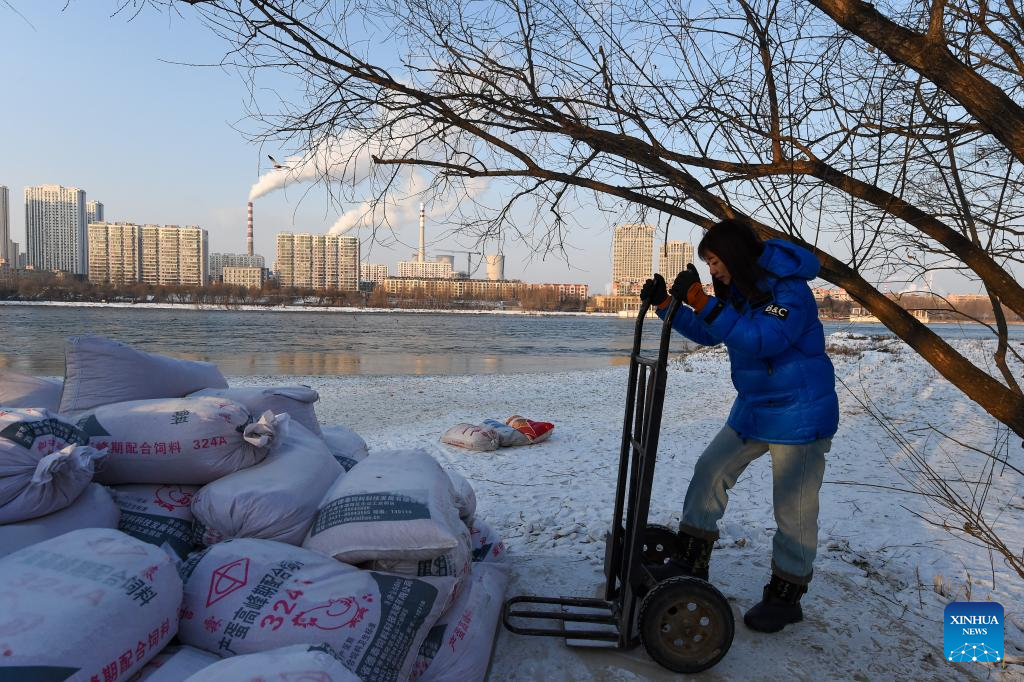
Wang Tingting transfers bird food on Changbai Island in Jilin City, northeast China's Jilin Province, Jan. 28, 2026. Wang Tingting, a post-90s bird protector, stays every day at Changbai Island wetland park, a bird paradise seated by the Songhua River in Jilin City, to care for the birds--providing food and observing their living conditions.
In 1996, Wang Tingting's uncle Ren Jianguo dropped his business as a ferryman near Changbai Island, and became a bird keeper as he often saw people hunting birds.
Wang took over her uncle's job when he was hospitalized for a sudden illness in 2023, and has rescued more than 50 birds on average each year.
In recent years, local authorities of the city have continuously restored the wetland ecology of Changbai Island. Through a series of effective measures such as dispatching dedicated personnel for bird protection, standardizing viewing activities, strictly controlling sewage discharge, and scientifically restocking, Changbai Island has returned to its natural ecological beauty.
Nowadays, over 13,000 birds come to Changbai Island for the winter every year. The spectacle of thousands of birds flocking together has become a major attraction for both citizens and tourists. (Xinhua/Zhang Nan)
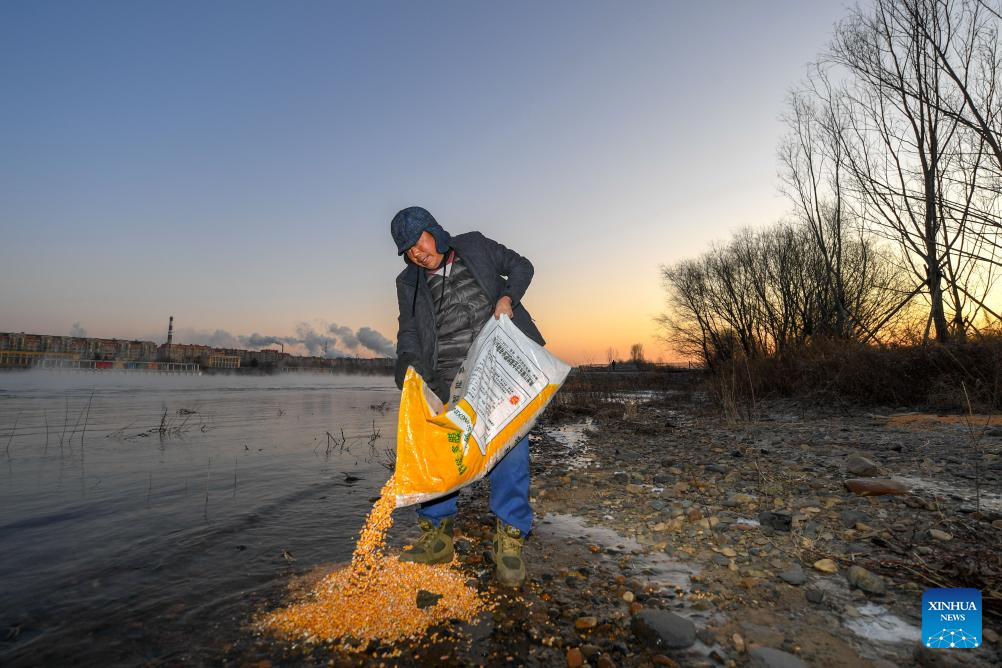
Ren Jianguo feeds birds on Changbai Island in Jilin City, northeast China's Jilin Province, Dec. 6, 2019. Wang Tingting, a post-90s bird protector, stays every day at Changbai Island wetland park, a bird paradise seated by the Songhua River in Jilin City, to care for the birds--providing food and observing their living conditions.
In 1996, Wang Tingting's uncle Ren Jianguo dropped his business as a ferryman near Changbai Island, and became a bird keeper as he often saw people hunting birds.
Wang took over her uncle's job when he was hospitalized for a sudden illness in 2023, and has rescued more than 50 birds on average each year.
In recent years, local authorities of the city have continuously restored the wetland ecology of Changbai Island. Through a series of effective measures such as dispatching dedicated personnel for bird protection, standardizing viewing activities, strictly controlling sewage discharge, and scientifically restocking, Changbai Island has returned to its natural ecological beauty.
Nowadays, over 13,000 birds come to Changbai Island for the winter every year. The spectacle of thousands of birds flocking together has become a major attraction for both citizens and tourists. (Xinhua/Zhang Nan)
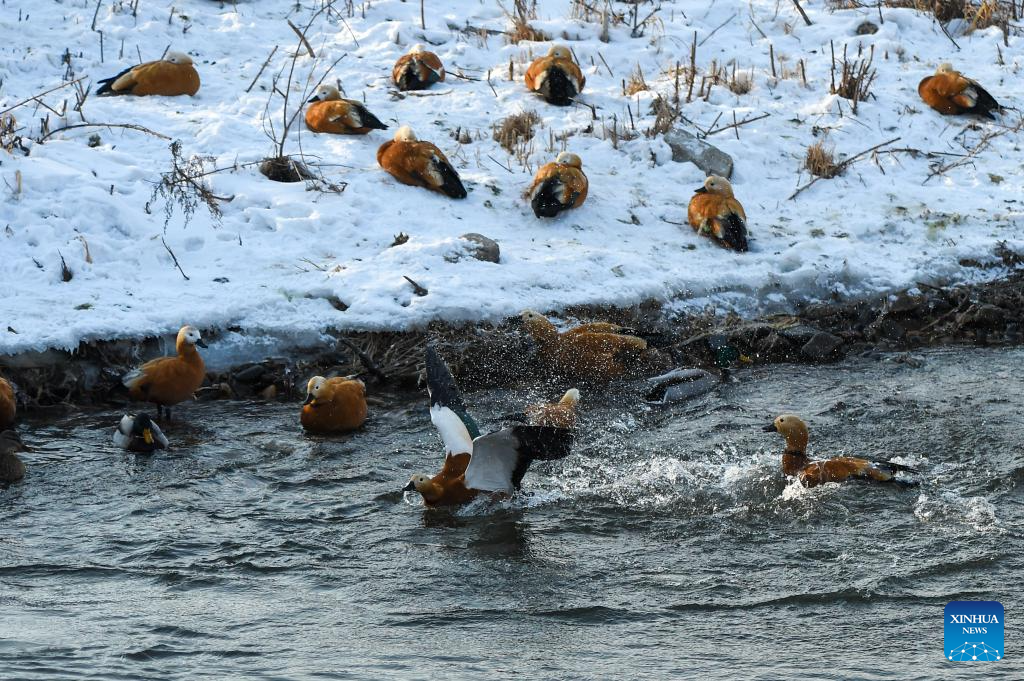
Birds inhabit Changbai Island in Jilin City, northeast China's Jilin Province, Jan. 28, 2026. Wang Tingting, a post-90s bird protector, stays every day at Changbai Island wetland park, a bird paradise seated by the Songhua River in Jilin City, to care for the birds--providing food and observing their living conditions.
In 1996, Wang Tingting's uncle Ren Jianguo dropped his business as a ferryman near Changbai Island, and became a bird keeper as he often saw people hunting birds.
Wang took over her uncle's job when he was hospitalized for a sudden illness in 2023, and has rescued more than 50 birds on average each year.
In recent years, local authorities of the city have continuously restored the wetland ecology of Changbai Island. Through a series of effective measures such as dispatching dedicated personnel for bird protection, standardizing viewing activities, strictly controlling sewage discharge, and scientifically restocking, Changbai Island has returned to its natural ecological beauty.
Nowadays, over 13,000 birds come to Changbai Island for the winter every year. The spectacle of thousands of birds flocking together has become a major attraction for both citizens and tourists. (Xinhua/Zhang Nan)
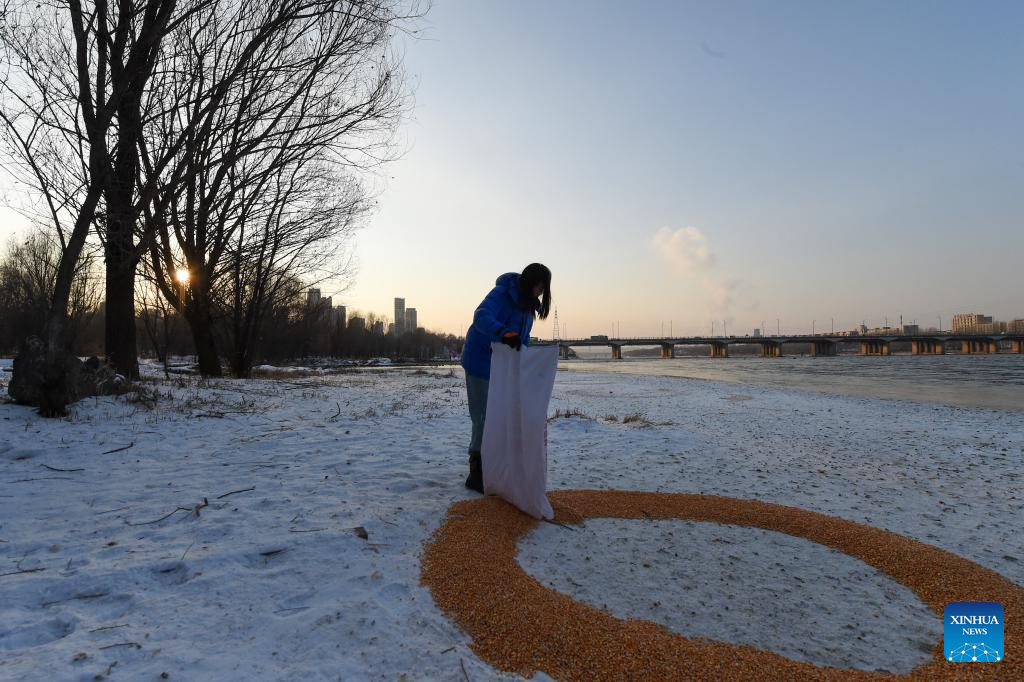
Wang Tingting feeds birds on Changbai Island in Jilin City, northeast China's Jilin Province, Jan. 28, 2026. Wang Tingting, a post-90s bird protector, stays every day at Changbai Island wetland park, a bird paradise seated by the Songhua River in Jilin City, to care for the birds--providing food and observing their living conditions.
In 1996, Wang Tingting's uncle Ren Jianguo dropped his business as a ferryman near Changbai Island, and became a bird keeper as he often saw people hunting birds.
Wang took over her uncle's job when he was hospitalized for a sudden illness in 2023, and has rescued more than 50 birds on average each year.
In recent years, local authorities of the city have continuously restored the wetland ecology of Changbai Island. Through a series of effective measures such as dispatching dedicated personnel for bird protection, standardizing viewing activities, strictly controlling sewage discharge, and scientifically restocking, Changbai Island has returned to its natural ecological beauty.
Nowadays, over 13,000 birds come to Changbai Island for the winter every year. The spectacle of thousands of birds flocking together has become a major attraction for both citizens and tourists. (Xinhua/Zhang Nan)
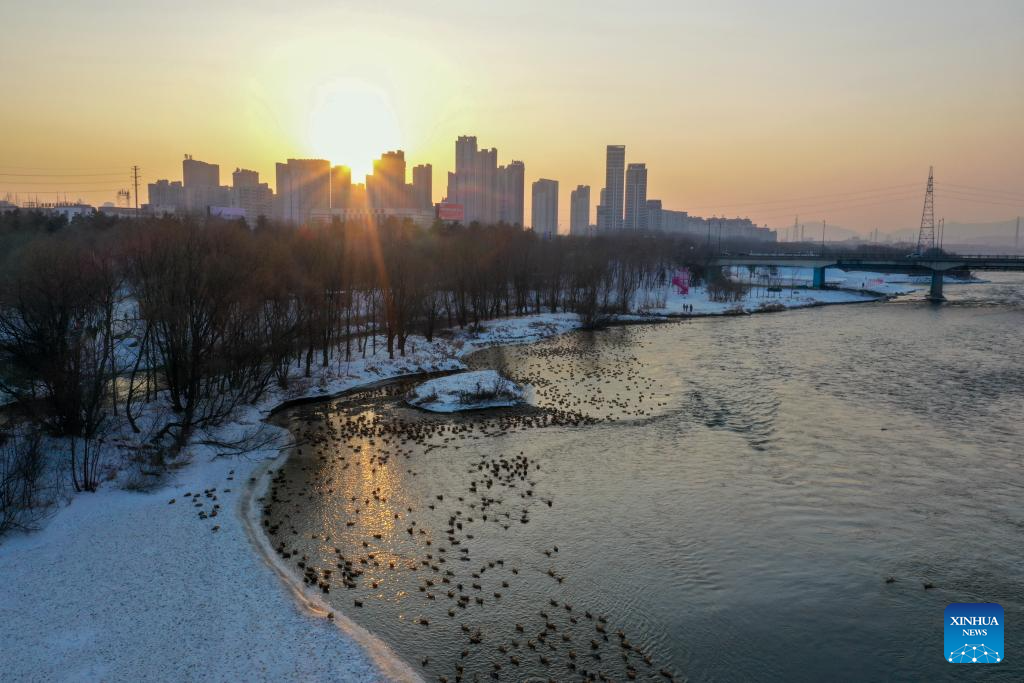
An aerial drone photo taken on Jan. 28, 2026 shows a large number of birds inhabiting Changbai Island in Jilin City, northeast China's Jilin Province. Wang Tingting, a post-90s bird protector, stays every day at Changbai Island wetland park, a bird paradise seated by the Songhua River in Jilin City, to care for the birds--providing food and observing their living conditions.
In 1996, Wang Tingting's uncle Ren Jianguo dropped his business as a ferryman near Changbai Island, and became a bird keeper as he often saw people hunting birds.
Wang took over her uncle's job when he was hospitalized for a sudden illness in 2023, and has rescued more than 50 birds on average each year.
In recent years, local authorities of the city have continuously restored the wetland ecology of Changbai Island. Through a series of effective measures such as dispatching dedicated personnel for bird protection, standardizing viewing activities, strictly controlling sewage discharge, and scientifically restocking, Changbai Island has returned to its natural ecological beauty.
Nowadays, over 13,000 birds come to Changbai Island for the winter every year. The spectacle of thousands of birds flocking together has become a major attraction for both citizens and tourists. (Xinhua/Zhang Nan)
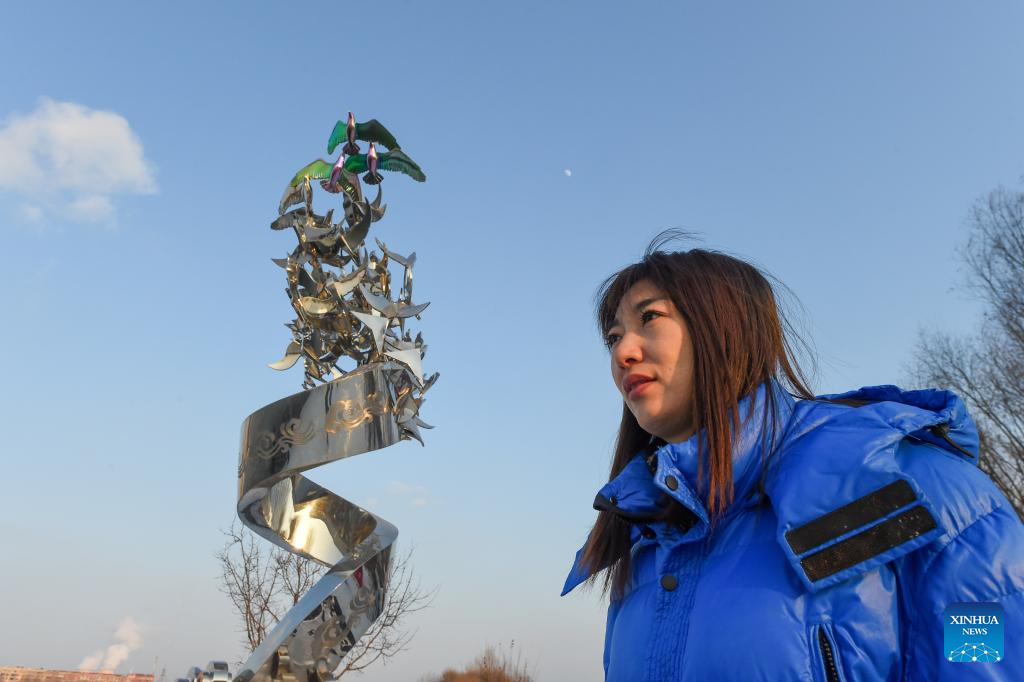
Wang Tingting observes bird habitats on Changbai Island in Jilin City, northeast China's Jilin Province, Jan. 28, 2026. Wang Tingting, a post-90s bird protector, stays every day at Changbai Island wetland park, a bird paradise seated by the Songhua River in Jilin City, to care for the birds--providing food and observing their living conditions.
In 1996, Wang Tingting's uncle Ren Jianguo dropped his business as a ferryman near Changbai Island, and became a bird keeper as he often saw people hunting birds.
Wang took over her uncle's job when he was hospitalized for a sudden illness in 2023, and has rescued more than 50 birds on average each year.
In recent years, local authorities of the city have continuously restored the wetland ecology of Changbai Island. Through a series of effective measures such as dispatching dedicated personnel for bird protection, standardizing viewing activities, strictly controlling sewage discharge, and scientifically restocking, Changbai Island has returned to its natural ecological beauty.
Nowadays, over 13,000 birds come to Changbai Island for the winter every year. The spectacle of thousands of birds flocking together has become a major attraction for both citizens and tourists. (Xinhua/Zhang Nan)


