
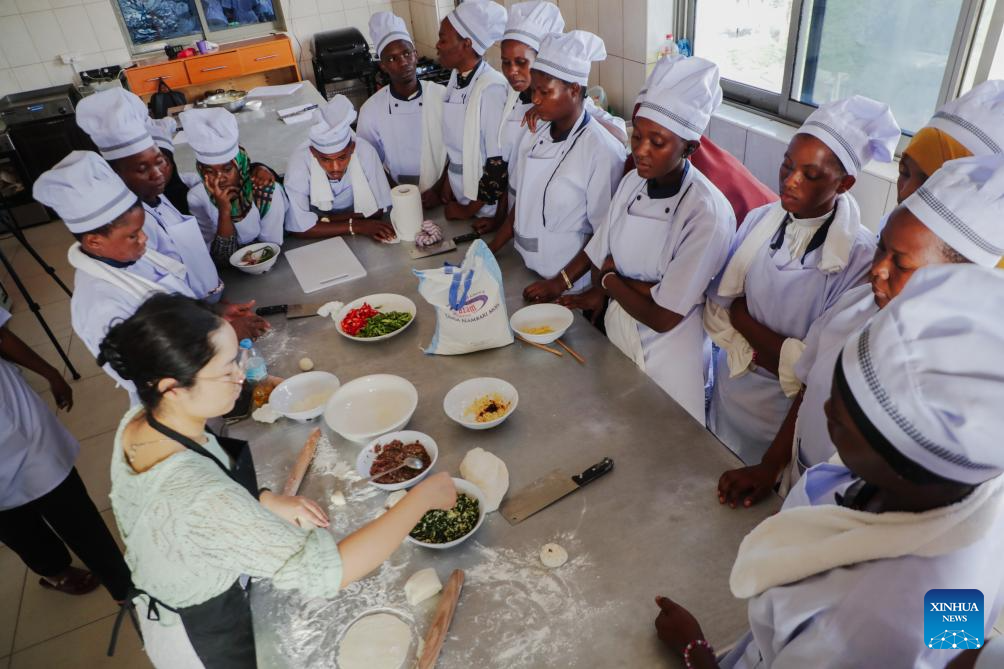
Tanzanian students learn to make steamed buns in Dar es Salaam, Tanzania, Jan. 28, 2026. (Xinhua/Emmanuel Herman)
by Xinhua writers Hua Hongli, Lin Guangyao, Lucas Liganga
DAR ES SALAAM, Jan. 30 (Xinhua) -- In a bustling kitchen in the heart of Dar es Salaam, the rhythmic thud of cleavers hitting chopping boards fills the air. Amid the steam and sizzle of woks, Ruth Washima Seni, a young Tanzanian hospitality student, is attempting a feat of precision: slicing a potato into hair-thin strips.
This is the "silver needle" cut, a demanding test of knife skills in Chinese cuisine. For Seni, it represents more than just a cooking technique; it is a slice of a new future.
"I didn't just learn how to cook Chinese food. I learned techniques, nutrition, discipline, and culture," said Seni, wiping her brow after mastering the cut. "Now I can prepare dumplings, buns, and stir-fried beef, and I understand why Chinese food focuses so much on health and balance."
Seni is one of 20 students in the latest batch of a unique culinary program at the Kilimanjaro Institute of Technology and Management (KITM). Launched in January 2026, the course is a collaboration between the institute and "The Best Company," a Chinese enterprise dedicated to cultural exchange.
BEYOND THE RECIPE
The program goes beyond teaching recipes; it immerses students in the philosophy of Chinese gastronomy. Led by Chef Wang Bo from Sichuan Province, the curriculum covers the spicy heat of Sichuan dishes, the savory depth of northeastern stews, and the delicate, fresh flavors of Cantonese cuisine.
"Chinese cuisine is very flexible," said Wang. "You can combine and substitute ingredients. But to do that well, you must understand the principles behind the food."
For the students, the learning curve involves more than just taste. It includes mastering the use of chopsticks and understanding the cultural stories behind dishes like dumplings (Jiaozi), which symbolize wealth and togetherness.
"I realized Chinese people are not all the same," Seni noted. "Each region has its own culture and food."
COOKING FOR A CAREER
While the cultural exchange is vibrant, the primary driver for these young "dreamers" is economic opportunity.
Filbert Haule, a hospitality tutor at KITM, explained that the decision to introduce Chinese cuisine was strategic. With Chinese tourists and businesspeople playing an increasingly visible role in Tanzania's economy, the demand for authentic Chinese food is rising.
Furthermore, Tanzania is preparing for a major influx of international visitors as it gears up to co-host the 2027 Africa Cup of Nations (AFCON).
"We want to offer visitors new tastes," Haule said. "When investors and restaurant owners see that these students can cook authentic and delicious Chinese food, they will be impressed. That creates more opportunities."
A BRIDGE OF FLAVORS
The course structure is rigorous. Mornings are spent watching video lessons from professional chefs in China, followed by afternoon practical sessions in KITM's kitchens where local ingredients-Tanzanian beef, lamb, and seafood-are transformed into Chinese classics.
For Chef Wang, food is the ultimate diplomat. "Food is a bridge that connects people," he said. "When students understand the culture, they cook with feeling, and the dish reaches a higher level."
Graduates of the program are recommended to Chinese restaurants and hotels across the region, offering them a fast track to employment.
For Ruth Seni, the wok has opened a world of possibilities. She now practices her skills at home, confident that she possesses a competitive edge in the job market.
"These are skills that make you different," she said, looking at her finished dish of stir-fried beef. "It's culture, health, business, and connection. I can even start my own restaurant one day." ■
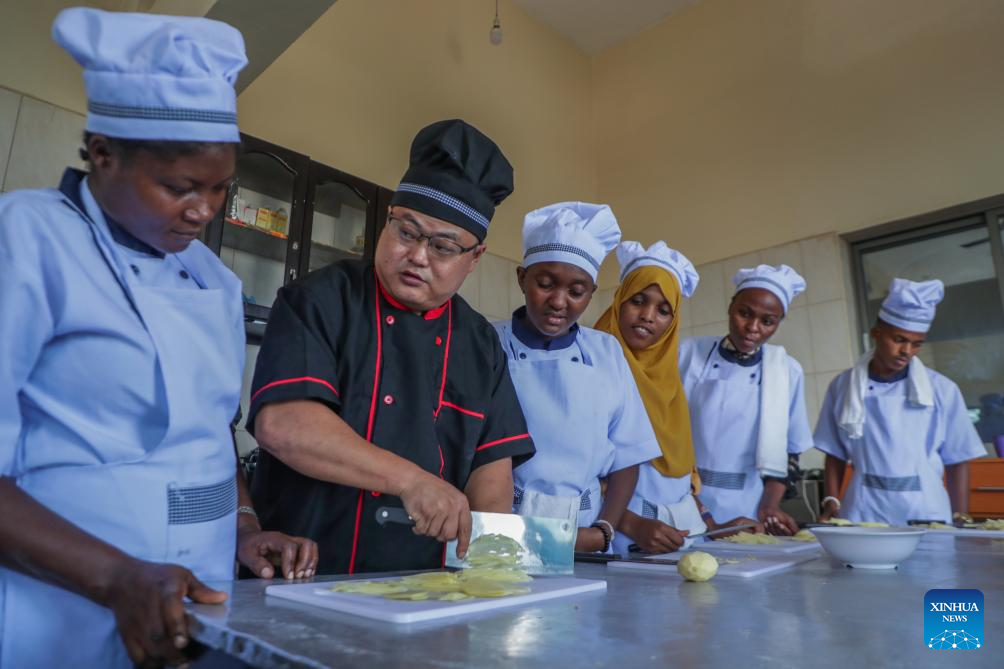
Tanzanian students learn "silver needle" cut, a demanding test of knife skills in Chinese cuisine, in Dar es Salaam, Tanzania, Jan. 28, 2026. (Xinhua/Emmanuel Herman)