Feature: Turkish artist paints new Silk Road stories in China's "porcelain capital"

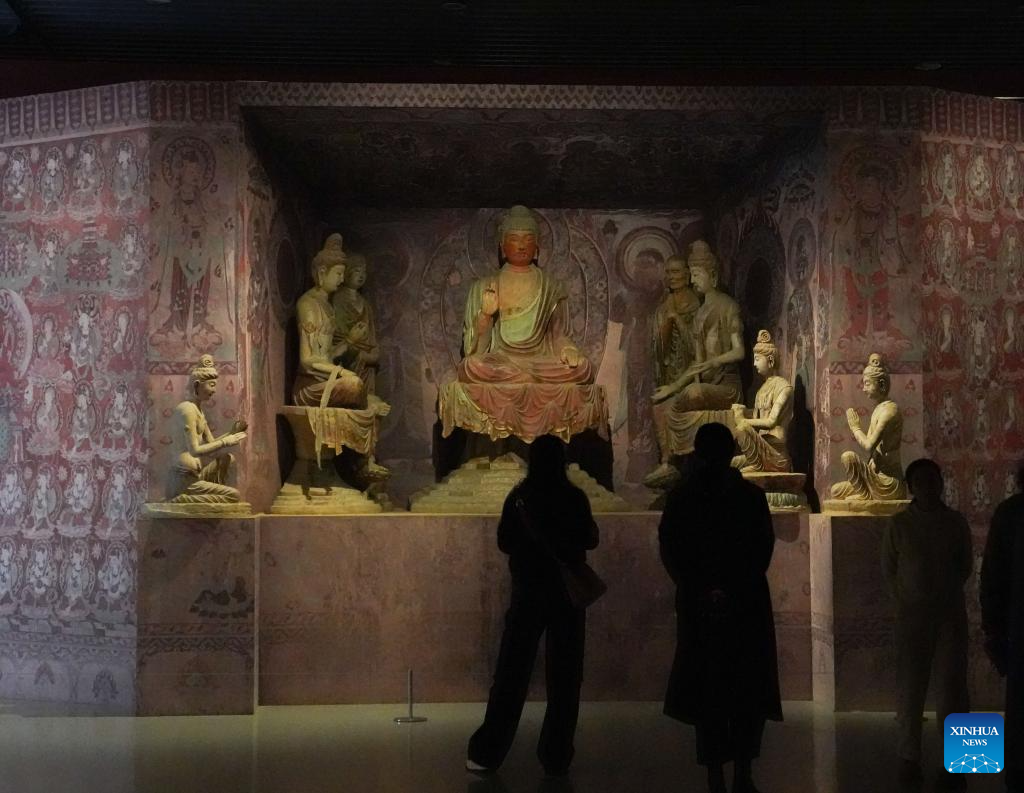
People visit the "Dunhuang in Glazes" exhibition at the Jiangxi provincial art museum in Nanchang, east China's Jiangxi Province, Dec. 19, 2025. (Xinhua/Zhou Mi)
NANCHANG, Jan. 10 (Xinhua) -- In a quiet studio in Jingdezhen, a Chinese city famous for its ancient porcelain heritage, Turkish artist Dilan Atasayar guided a brush dipped in cobalt blue across the curve of a white clay body.
Under her steady hand, two ancient civilizations seemed to meet, as intricate vine motifs from traditional Turkish art intertwined with the flowing ribbons of the "Flying Apsaras," the celestial beings depicted in China's ancient Dunhuang murals.
"It feels like a dialogue across time and space," she said.
For Atasayar, a PhD student at Jingdezhen Ceramic University, this city in east China's Jiangxi Province has become a "second hometown." Her artistic journey, however, began thousands of miles away in Iznik, a Turkish city renowned for its historic ceramic production.
Centuries ago, Jingdezhen exported its ceramics, including the exquisite blue-and-white porcelain, to Central Asia, West Asia, Europe and Africa via the ancient Silk Road, profoundly influencing the development of porcelain making in places like Iznik.
Growing up in Iznik, Atasayar spent her childhood gazing at these Eastern ceramic treasures in local museums, fascinated by the blue motifs that seemed both foreign and familiarly connected to her own culture.
After spending eight years studying traditional ceramic arts in Türkiye, Atasayar decided to trace the roots of that inspiration. In 2023, she enrolled in a doctoral program at Jingdezhen Ceramic University, and has been studying to master Chinese ceramic techniques such as blue-and-white shading and underglaze painting.
But her exploration has gone beyond traditional ceramics. After settling in Jingdezhen, Atasayar became fascinated by a flourishing artistic trend: the creative fusion linking Jingdezhen's porcelain with the aesthetics of Dunhuang, a historic hub along the ancient Silk Road in northwest China.
"The fluid lines and rich storytelling of the Dunhuang murals share an intrinsic resonance with Turkish traditional decorative arts," Atasayar explained. "And Jingdezhen's porcelain and blue-and-white techniques provide the perfect medium to express this connection."
In her works, cultural boundaries often blur as she weaves together motifs from both traditions. For instance, a Flying Apsara might be depicted holding an instrument reminiscent of Turkish classical design.
This fusion goes beyond simple collage. Atasayar delves deep into the history, philosophy and aesthetics of the Dunhuang art, all the while refining her mastery of ceramic techniques.
"Every time I open the kiln, it's like unwrapping a gift from history. The result is unpredictable, but full of surprises," she said.
Her dedication and effort have borne fruit. Her artwork "The Friendship Vase" is currently on display at the Jiangxi provincial art museum as part of the "Dunhuang in Glazes" exhibition, drawing visitors from home and abroad.
On the vase, Chinese auspicious clouds dance with Turkish scroll patterns, while the sacred lotus of the East resonates with graceful Ottoman tulip motifs.
Atasayar is not alone in her creative pursuit. She is part of a growing community of foreign artists in Jingdezhen, who have been drawn by the city's porcelain-making heritage and open atmosphere. Today, the ancient porcelain capital hosts thousands of international artists who, like Atasayar, find new inspiration in old traditions.
"Historically, blue-and-white porcelain traveled from China to Türkiye and shaped our art. Today, we bring our own cultural background back here to engage in dialogue with Chinese tradition and create something new," Atasayar said.
With the sister-city bond established between Iznik and Jingdezhen in 2021, Atasayar sees her work as more than just art, but a modern continuation of the ancient trade routes.
"I hope my artworks will add a new Silk Road, paved with glaze and creativity, between these two ceramic cities and our two countries," she said. ■
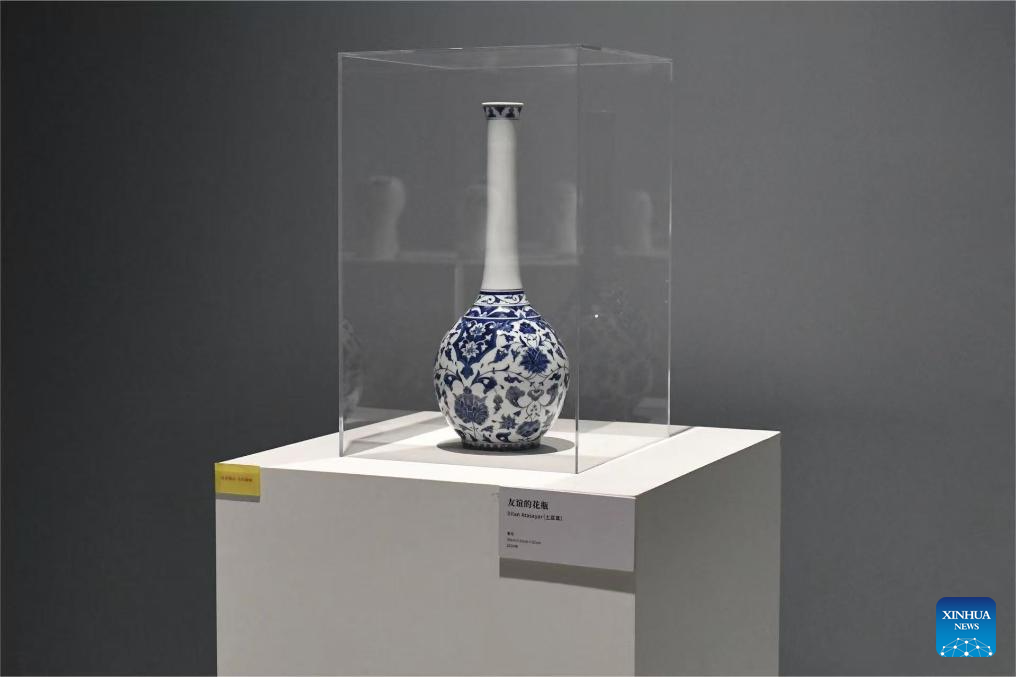
This undated photo shows Turkish artist Dilan Atasayar's artwork "The Friendship Vase" displayed during the "Dunhuang in Glazes" exhibition at the Jiangxi provincial art museum, in Nanchang, east China's Jiangxi Province. (Jiangxi provincial art museum/Handout via Xinhua)
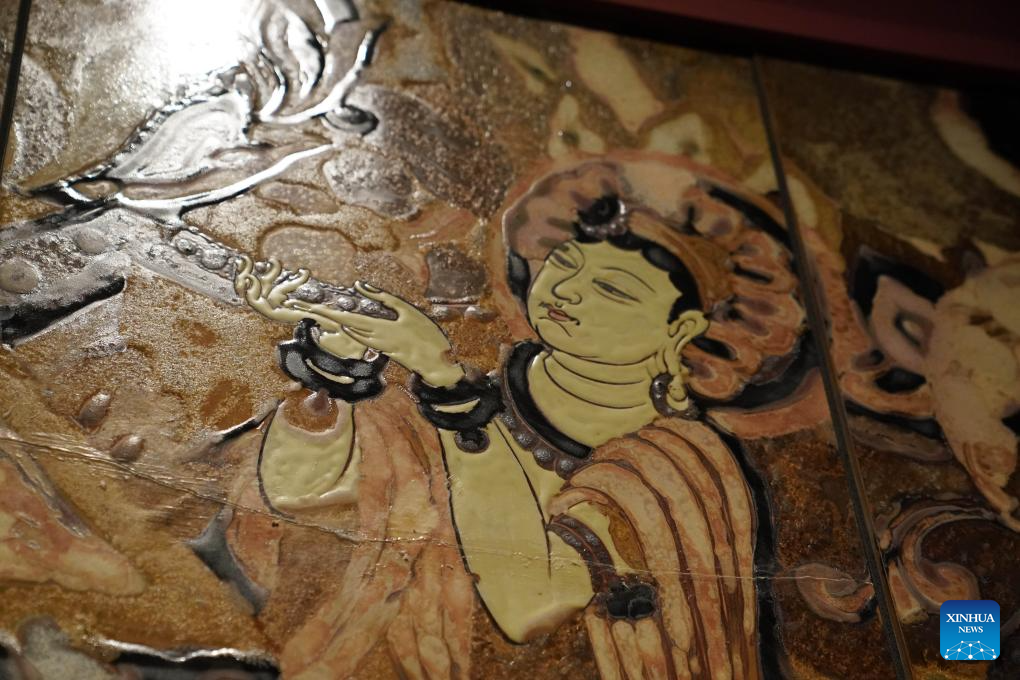
This photo taken on Dec. 19, 2025 shows a ceramic artwork related to Dunhuang murals during the "Dunhuang in Glazes" exhibition at the Jiangxi provincial art museum, in Nanchang, east China's Jiangxi Province. (Xinhua/Zhou Mi)
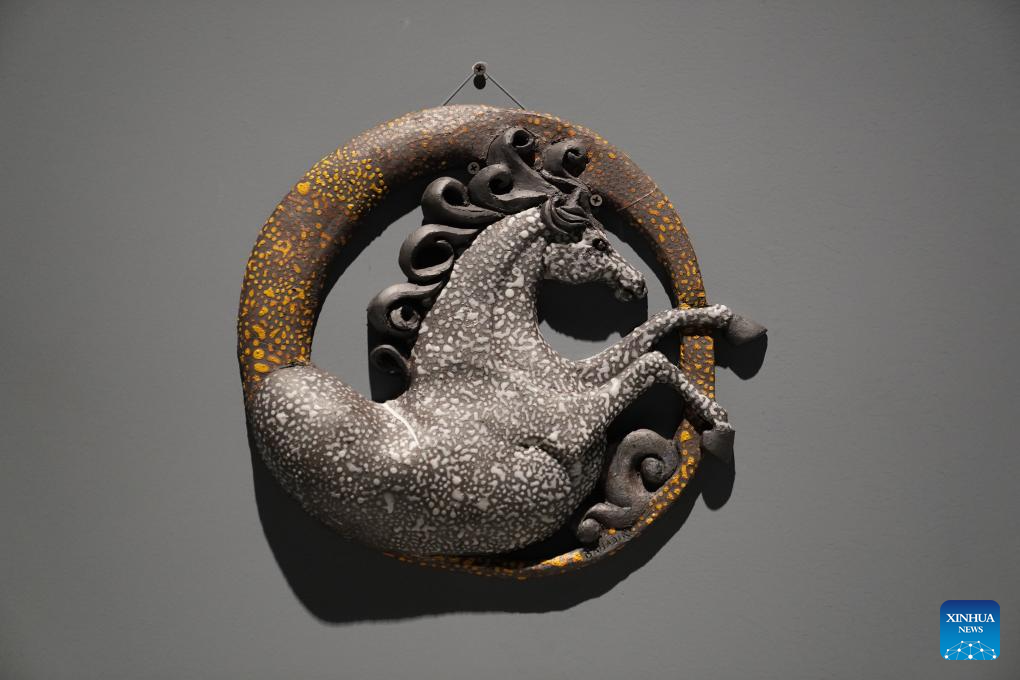
This photo taken on Dec. 19, 2025 shows a ceramic artwork by a Turkish artist during the "Dunhuang in Glazes" exhibition at the Jiangxi provincial art museum, in Nanchang, east China's Jiangxi Province. (Xinhua/Zhou Mi)
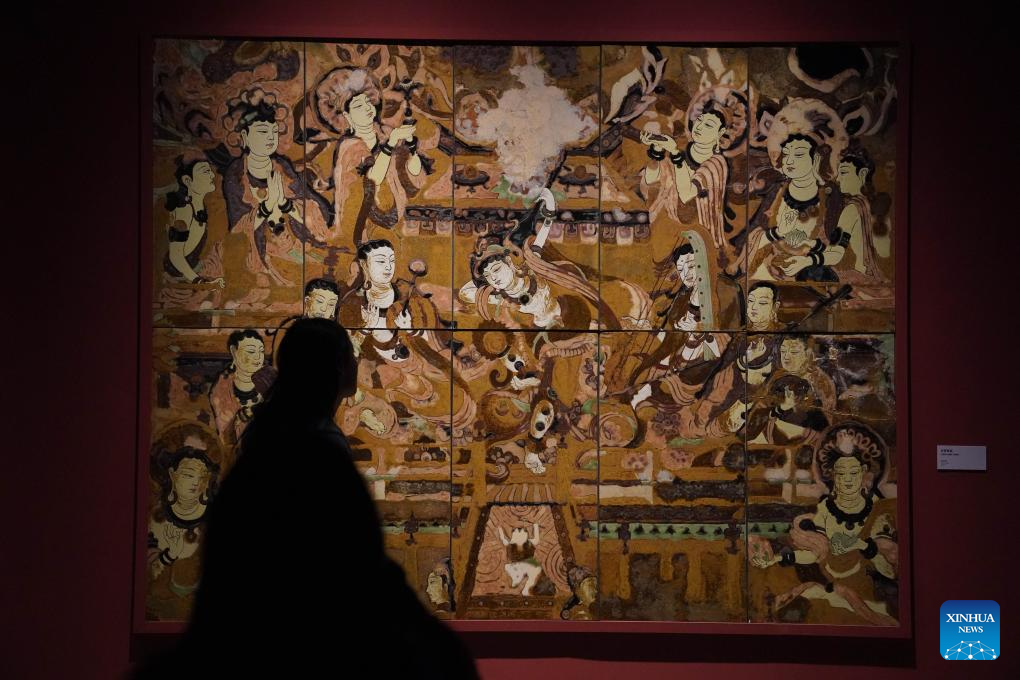
A person visits the "Dunhuang in Glazes" exhibition at the Jiangxi provincial art museum in Nanchang, east China's Jiangxi Province, Dec. 19, 2025. (Xinhua/Zhou Mi)
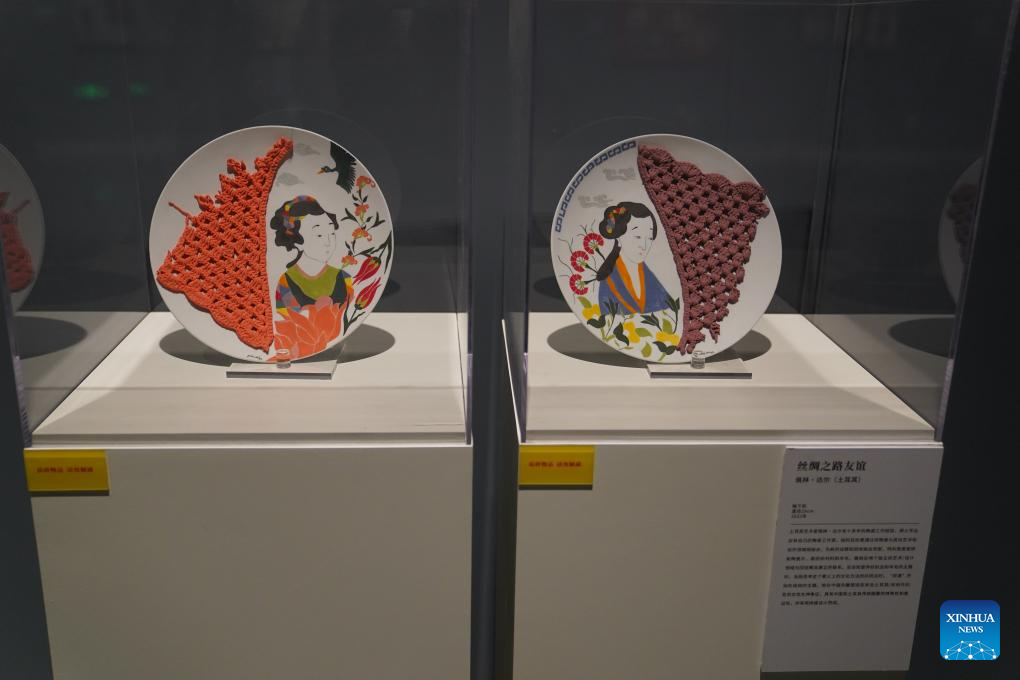
This photo taken on Dec. 19, 2025 shows two ceramic artworks by a Turkish artist during the "Dunhuang in Glazes" exhibition at the Jiangxi provincial art museum, in Nanchang, east China's Jiangxi Province. (Xinhua/Zhou Mi)
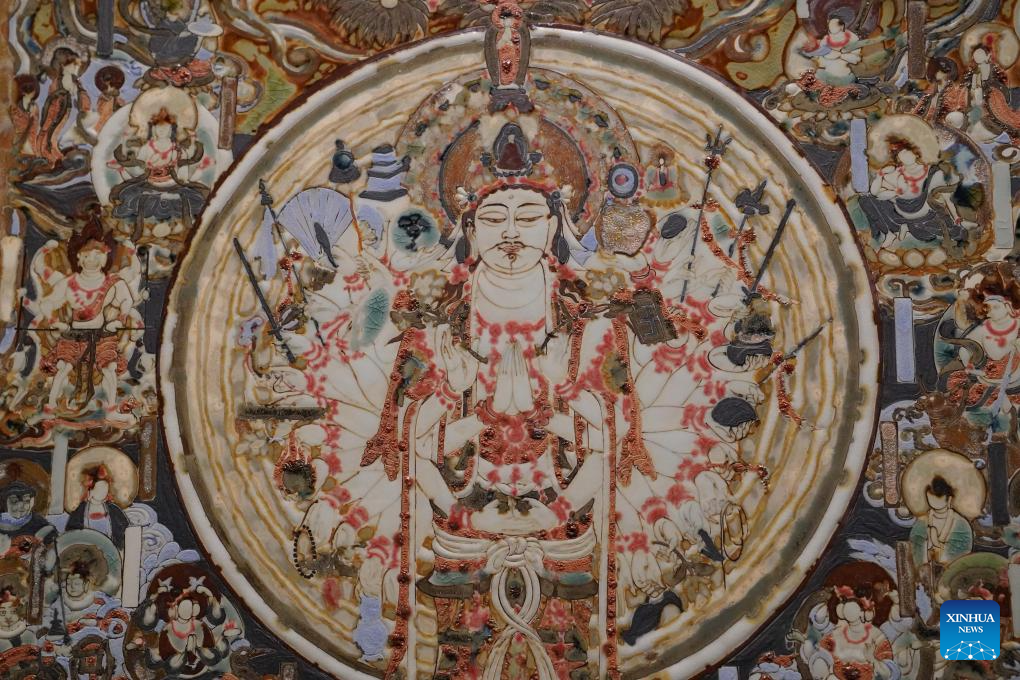
This photo taken on Dec. 19, 2025 shows a ceramic artwork related to Dunhuang murals during the "Dunhuang in Glazes" exhibition at the Jiangxi provincial art museum, in Nanchang, east China's Jiangxi Province. (Xinhua/Zhou Mi)
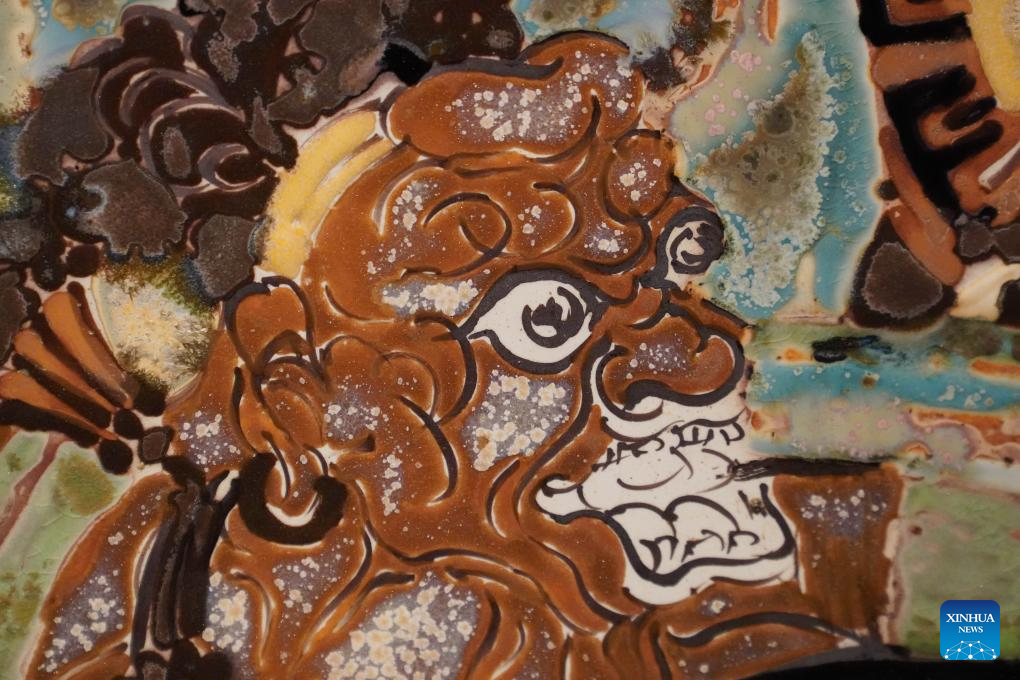
This photo taken on Dec. 19, 2025 shows a ceramic artwork related to Dunhuang murals during the "Dunhuang in Glazes" exhibition at the Jiangxi provincial art museum, in Nanchang, east China's Jiangxi Province. (Xinhua/Zhou Mi)


