Self-vassalization, US rift, internal fractures: Europe faces tough strategic year


In 2025, Europe's strategic vulnerability was exposed by strained transatlantic ties under "Trump 2.0," the protracted Ukraine conflict, internal EU paralysis and exclusion from key diplomatic processes. Moreover, Europe's weak ability to act collectively has left its goals of rearmament, competitiveness, and strategic autonomy increasingly elusive.
BRUSSELS, Dec. 17 (Xinhua) -- Europe's strategic vulnerability became starkly visible in 2025 as three crises converged -- a disruptive shift in transatlantic relations under "Trump 2.0," mounting insecurity from the protracted Russia-Ukraine conflict, and persistent governance paralysis inside the EU that repeatedly obstructed collective action.
In a rapidly changing global environment, an internally divided Europe, lacking consensus, political will, and operational capacity, faces mounting pressure. Prospects for restoring economic competitiveness or achieving comprehensive rearmament remain dim.

SHIFT IN THE TRANSATLANTIC ALLIANCE
The inauguration of the new Trump administration ended the "honeymoon" of U.S.-European cooperation. Almost immediately, Washington reshaped the transatlantic ties around an uncompromising "America First" doctrine. Europe was confronted with a barrage of unilateral U.S. demands: sweeping tariff threats, renewed talk of "purchasing Greenland," pressure to drastically increase defense spending, and the use of steel and aluminum duties to coerce the EU into loosening digital regulations.
The December 2025 U.S. National Security Strategy (NSS) solidified this ideological rift. The document warned of Europe's supposed "civilizational erasure" due to low birth rates and migration, accused the EU of undermining "political freedom and sovereignty," and questioned the reliability of certain European allies. Notably, it asserted that the United States aimed to "help Europe correct its current development trajectory," a statement interpreted by European media as a license for interference in EU elections and domestic politics.

Most consequential was Washington's decision to scale back its security commitments to Europe. At the NATO Summit in The Hague, EU member states, despite high debt and fiscal strain, were pushed to commit to raising defense spending to 5 percent of GDP by 2035. The Trump administration halted full military support for Kyiv and demanded that European countries finance U.S. aid instead. Europeans were further shocked by Trump's perceived favoritism toward Russia during peace negotiations, where Europe was conspicuously sidelined.
Fearful of antagonizing Washington while facing an increasingly assertive Russia, Europe showed signs of what observers described as "self-vassalization." The EU made sweeping concessions in trade talks, producing an agreement that European Parliament Vice-Chair Kathleen Van Brempt denounced as "neither fair nor balanced."
"With the U.S. administration increasingly taking on the role of unreliable broker over a staunch ally, Europe is in a parlous position," said British political commentator John Kampfner.
FATIGUE AND STRATEGIC DILEMMA OVER UKRAINE
As the Russia-Ukraine conflict ground into its fourth year, hopes for a ceasefire remained distant, deepening Europe's sense of strategic helplessness. The sharp reduction in Russian gas exports battered European economies, while massive aid commitments to Ukraine stretched both financial resources and military stockpiles.
Europe faces a painful dilemma: continuing aid drains already depleted arsenals and widens fiscal deficits; halting aid risks geopolitical collapse. With Ukrainian funding projected to run dry in early 2026, signs of donor fatigue became evident. According to the Kiel Institute, European military commitments during the summer of 2025 plummeted 57 percent compared with the first half of the year.
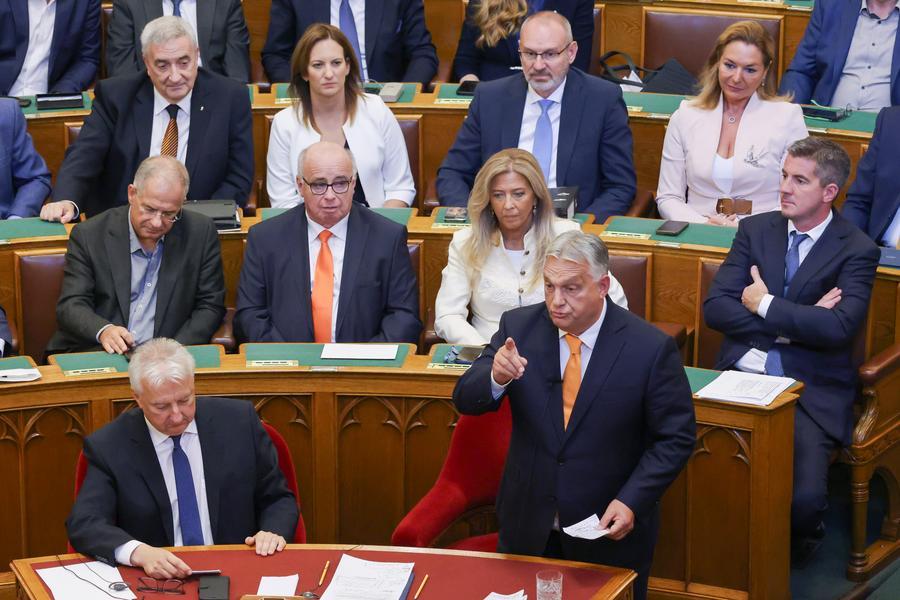
Nineteen rounds of EU sanctions against Russia brought limited results, while generating deep internal frictions. Hungary and Slovakia repeatedly challenged the bloc's Russia policy, undermining unity that the EU has been trying to maintain.
Despite continued political rhetoric supporting Ukraine, expectations about the war's outcome have shifted. A November report by the French Institute of International Relations (IFRI) concluded that although Russia faces stagflation, its capacity to sustain military operations remains intact.
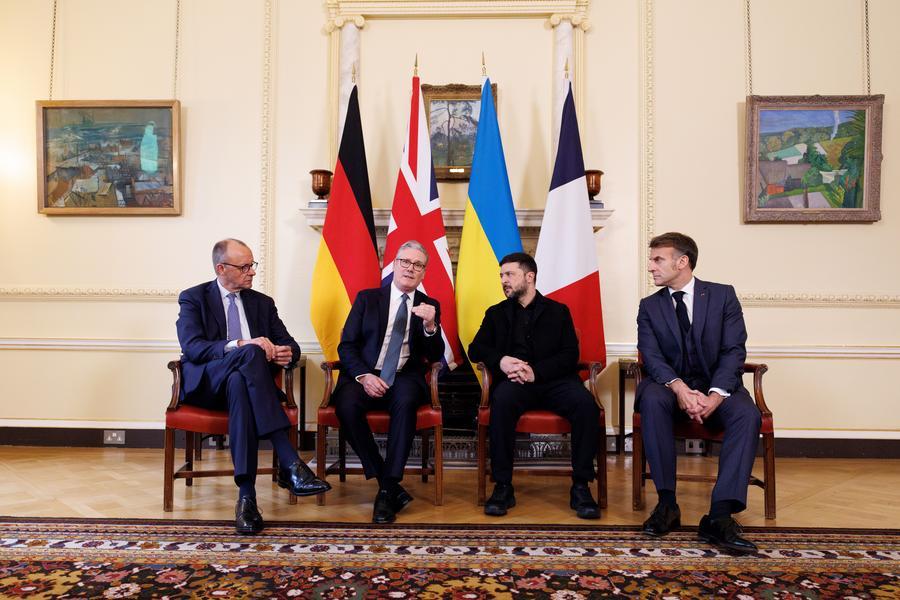
Although France, Germany, and the UK led "Coalitions of the Willing," they acknowledged that without U.S. aerial and intelligence support, Europe could not guarantee Ukraine's post-ceasefire security.
FRACTURE AND ACTION DEFICIT
A surge in far-right movements across Europe reshaped political landscapes in 2025, intensifying strains on the EU's governance model of supranational cooperation and compromise. A report by the Konrad Adenauer Stiftung highlighted "structural deficits" in EU foreign and security policymaking. Key initiatives, from Ukraine aid packages to sanctions, were hamstrung by vetoes from individual states such as Hungary.
The European Commission's proposal to leverage frozen Russian assets to support Ukraine encountered fierce resistance from Belgium, home to clearing giant Euroclear, which would bear significant financial and legal exposure.
At the national level, Europe's two traditional anchors, France and Germany, suffered from political instability, policy paralysis, budgetary pressures, and sluggish economic growth. This erosion of leadership weakened the EU's overall strategic coherence. "Facing war in Ukraine and a less reliable America, Europe needs a fully functional Franco-German partnership to sustain a coherent foreign policy," noted IFRI researcher Paul Maurice.
In her September 2025 State of the Union address, European Commission President Ursula von der Leyen admitted that "Europe's independence hinges on its ability to remain competitive in volatile times." She pledged major investments in digital and clean technologies while addressing bottlenecks in energy, capital, and regulatory frameworks.
As 2026 approaches, Europe's rearmament initiatives are expected to accelerate, but long-term competitiveness reforms will likely remain slow and fragmented. With transatlantic relations undergoing a dramatic realignment, and constrained by both structural limits and political divisions, the EU's pursuit of genuine "strategic autonomy" remains distant. ■










Comments